

How to Leverage Sales Funnels for Business Advantage
The sales funnel is a popular marketing strategy used by businesses to generate,
nurture and convert potential customers. While the concept of a sales funnel is
simple enough, it can be difficult to achieve and maintain optimal results. In this
article, we discuss the advantages and disadvantages of sales funnels and provide
tips for using them to your advantage.
How to Leverage Sales Funnels for Business Advantage
Sales funnels are a critical component of any successful marketing campaign. They
help to organize and prioritize potential leads, ensuring that your team is focused on
the most realistic prospects at each stage of the process. In addition, sales funnels
provide a clear framework for nurturing leads and building long-term customer
relationships that can lead to repeat purchases and referrals.
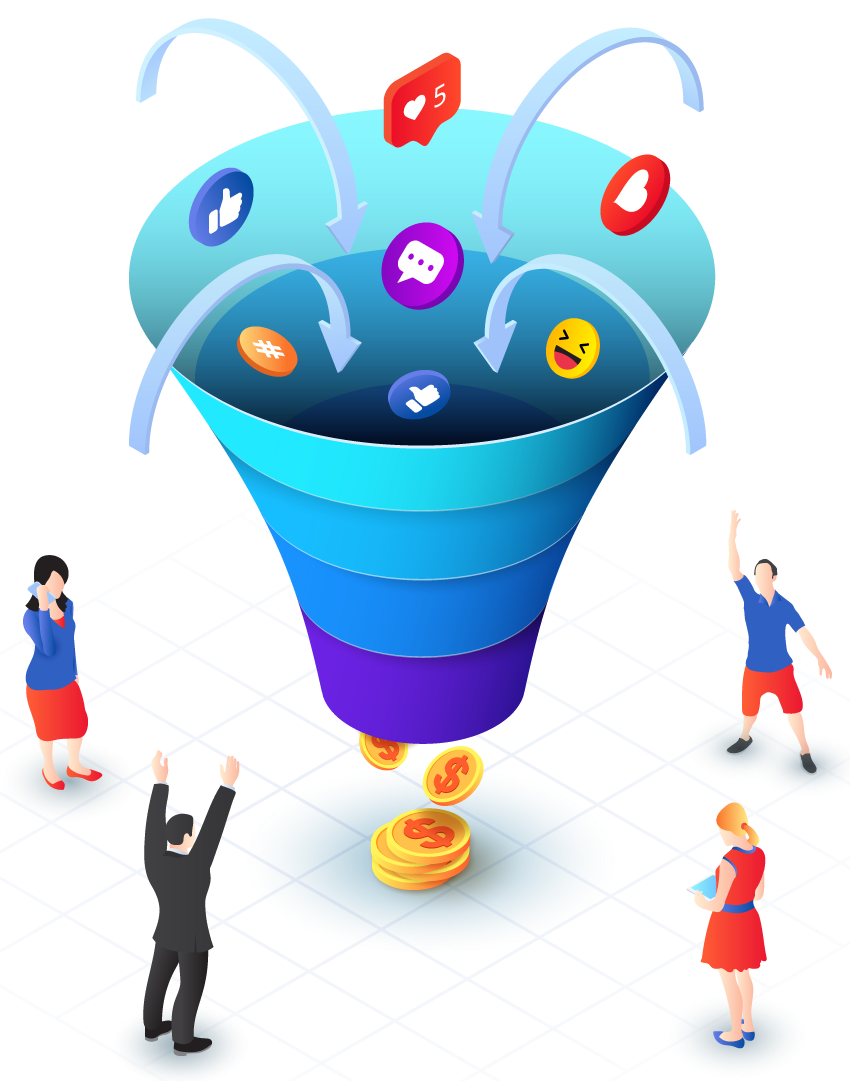
A sales funnel is a multi-stage process that begins with creating awareness for your
product or service and ends with converting new customers into loyal repeat buyers.
Generally, each stage in the sales funnel has a different set of marketing goals and
strategies. For example, the awareness stage typically focuses on driving website
traffic, creating brand awareness and attracting potential customers with content
such as blogs and social media posts. The interest and desire stages, on the other
hand, focus more on developing a deep understanding of your customers' pain
points, challenges and needs. This allows you to offer solutions that are relevant and
valuable to them.
By the action or conversion stage, your goal is to turn prospective buyers into paying
customers. During this phase, you can nurture and grow your customer relationships
by offering discounts and other incentives to encourage repeat purchases. You can
also use sales data to identify your best customers and create targeted marketing
campaigns that reward their loyalty.
Despite the many benefits of a sales funnel, it is important to remember that
customer habits are constantly evolving. With increased access to online
information, modern buyers often complete their own research before engaging with
a salesperson. In fact, Gartner estimates that B2B buyers traverse 57% of the sales
funnel on their own without engaging with a rep.
For this reason, it is important to regularly evaluate and update your sales funnel to
ensure that it is aligned with current customer behavior. In addition, you may need
to change your marketing and sales processes in order to optimize your funnel for
today's market.
One way to do this is by adopting a "flywheel" approach, which leverages your
current customers to attract and engage new prospects. This is accomplished by
providing case studies, testimonials and other customer-focused content that
showcases your product's strengths and values.
By leveraging sales funnels to their advantage, businesses can increase conversion
rates and ultimately drive revenue growth. By understanding and leveraging the
different stages of the sales funnel, businesses can attract and retain customers
while maximizing their ROI. By focusing on customer intent and building long-term
relationships, businesses can establish trust and credibility, which can lead to
repeated purchases, referrals and positive word-of-mouth.
Free Training video
How To Transform Your Online Business with Our Universal Sales Funnel Template
My Recent Posts
All-in-One Sales Automation Platform
Check out my recent post on all-in-one sales and marketing tools and what I think of it.
Sales Funnels
Check out my recent post on sales funnels and what I think about them. Are they still worth it?

The Same "about me" text you wrote on your about me page; you want to write it here or write an excerpt of it here. Just make sure it makes sense, and looks complete if you're going to write an excerpt. So delete this text and add yours on every article page.
[ENTER YOUR NAME HERE]
©Copyright 2025 My Sales and Marketing Growth